


The safety relief valve is the one component on a tank container that everyone hopes never operates — and the one component that must work perfectly when called upon. Understanding how to select and maintain it is core knowledge for tank builders and fleet engineers.
How a Safety Relief Valve Works
The valve remains closed because a spring holds a disc against the seat. When tank pressure rises to the set pressure, the force on the disc overcomes the spring and the valve opens, venting excess pressure to the atmosphere or a vent line. Once pressure falls back below the set point, the spring re-seats the valve. It is a fully mechanical, power-free protection — which is exactly why it is trusted as the last line of defense.
What Causes Overpressure?
- Thermal expansion — a tank filled to 98% and left in the sun can exceed its pressure limit
- Fire exposure — radiant heat rapidly raises vapor pressure
- Chemical reaction — incompatible residue reacting with cargo
- Overfilling and mis-operation — feeding product with all valves closed
Sizing and Set Pressure
The set pressure relates to the tank’s test pressure and maximum working pressure per the applicable code (ADR Chapter 6.7 / TPED / EN 14096 family of requirements). Two numbers matter:
- Set pressure — where the valve starts to open
- Relief capacity — how much vapor it can pass at full lift, which must cover the fire-exposure sizing case
Both must be documented in the tank’s certification file. A valve with the correct set pressure but insufficient capacity still leaves the tank unprotected in a fire.
Common Configurations
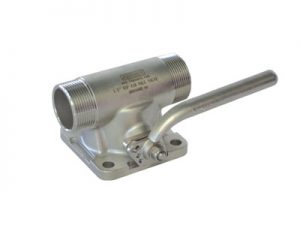
Tank containers typically carry multiple relief devices: small threaded valves (1/2″, 1″, 1.5″ BSP) on the manlid or top plate, plus larger flanged units (e.g., 2.5″ flanged) for higher-capacity tanks such as gas service (T50, T75 types). Two-stage and pilot-operated designs serve specialized gas applications.
Maintenance: The Part Everyone Skips
Relief valves are testable and should be tested. Recommended practice:
- Pop test (bench set-pressure verification) at every periodic inspection
- Seat integrity check during the 2.5-year intermediate test
- Corrosion inspection — spring and disc corrosion silently changes set pressure
- Replacement, not repair for any valve that fails to re-seat cleanly
Never paint, wire shut, or “adjust” a relief valve in the field — tampering voids the tank’s certification and is a criminal offense in many jurisdictions.
The Bottom Line
Specify relief valves with capacity calculations on file, source them from manufacturers who 100% test and stamp every unit, and bench-test them on schedule. The cost of rigor is trivial; the cost of a failed valve is a tank rupture.
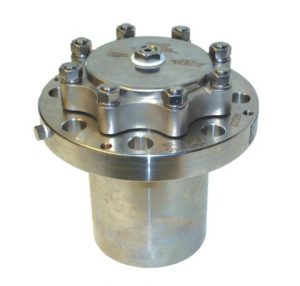
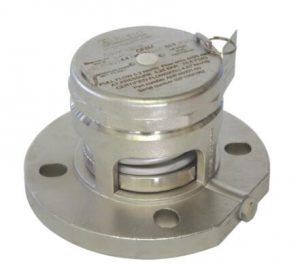
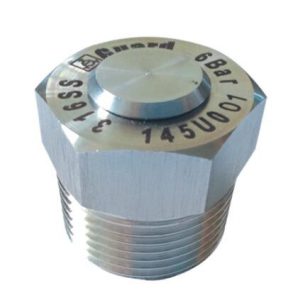
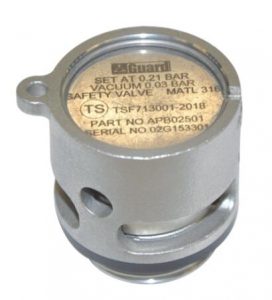
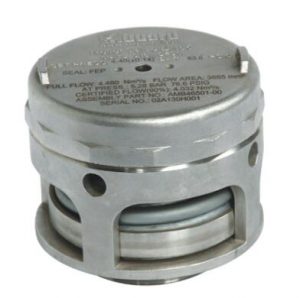
Every GAURD safety relief valve is 100% pressure-tested before shipment. Explore safety relief valve options.