

If you have ever read a valve datasheet and wondered whether you need EN 14432 or EN 14433 conformity, you are not alone. The two standards sound interchangeable — they are not. Specifying the wrong one creates inspection problems years down the road.
The Simple Version
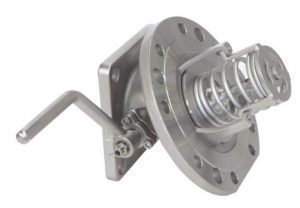
- EN 14432 covers internally-mounted self-closing breakaway valves — in practice, the 3-way bottom valve family that sits inside the tank’s sump
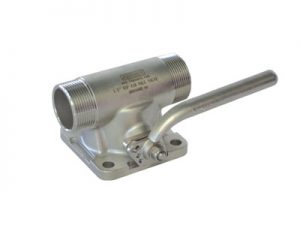
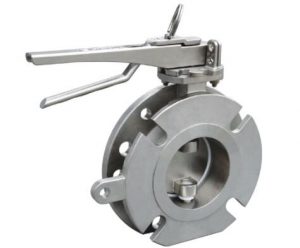
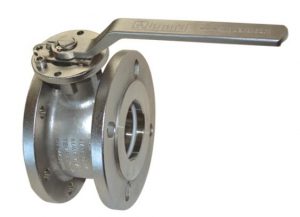
- EN 14433 covers externally-mounted shut-off valves — the ball valves and butterfly valves bolted to the tank’s external piping
What EN 14432 Tests (and Why It Matters)
The 3-way bottom valve under EN 14432 must prove:
- Leak-tightness under breakaway — if the external pipework is sheared off in an accident, the internal valve closes automatically and retains the cargo
- Emergency closing — the valve can be closed from a remote/protected position
- Endurance — thousands of open-close cycles without performance loss
- Shut-off classification — defined leakage classes at defined pressures
This is the standard that makes bottom discharge legally permissible for many dangerous goods. It is the reason a true 3-way valve costs more than a generic ball valve: it is protecting the cargo in a crash scenario.
What EN 14433 Tests
External shut-off valves under EN 14433 prove:
- Shell strength and seat tightness at rated pressure
- Fire-safety provisions for certain categories
- Operational integrity across temperature range
- Marking and material traceability
These valves provide the everyday flow control on the manifold — they isolate sections of piping, connect to hoses, and support top-loading configurations.
A Practical Specification Example
A standard chemical tank container with bottom discharge might use:
- EN 14432 3-way bottom valve — the primary discharge and crash protection
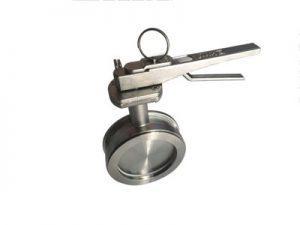
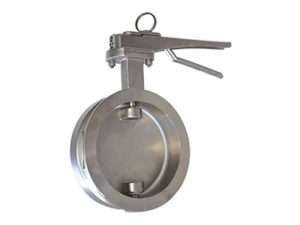
- EN 14433 butterfly valves (4″–5″) on the external manifold for flow direction and isolation
- Air inlet valve per the tank’s general service equipment requirements
A top-discharge-only gas tank (T50) uses a different architecture entirely — external valves dominate and the bottom outlet may not exist.
Audit Tip
When auditing suppliers, ask for the type examination certificate number and its annexes, then check that the size, pressure class, and seal materials you are buying appear in the annex scope. Suppliers often hold certification for one size while selling a whole family — the annex tells the truth.
Bottom Line
EN 14432 = internal self-closing breakaway protection. EN 14433 = external shut-off integrity. Match each valve to its standard, and your inspection file writes itself.
Guard’s discharged foot valve and ball valve butterfly valve families are documented to their applicable EN scopes. Request documentation.