


Here is a scenario every tank operator fears: a driver opens the bottom discharge valve without opening the air inlet valve first. Liquid rushes out, pressure inside the barrel drops below atmospheric, and the tank — a thin-walled stainless vessel — begins to buckle. The result is a written-off tank container and a six-figure loss.
The air inlet valve exists to make this impossible.
The Physics in One Paragraph
As liquid leaves a sealed tank, the volume it vacates must be replaced by something. If no air enters, internal pressure falls into vacuum. ISO tank barrels are designed for internal pressure, not external crushing — even modest vacuum can permanently deform the shell. The air inlet valve admits filtered, controlled air during discharge to keep the tank at atmospheric pressure.
Two Main Designs
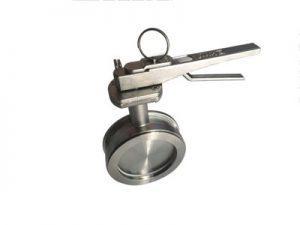
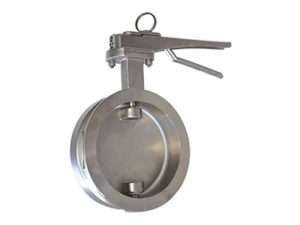
Air Inlet Butterfly Valve
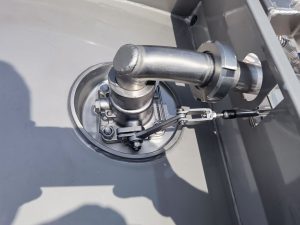
Commonly 2″ clamped or flanged, butterfly-style air inlet valves are light, fast, and economical. They suit general chemical service where the valve is opened at the start of discharge and closed afterward. Check the seat material against your cargo’s vapor compatibility.
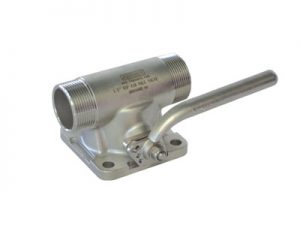
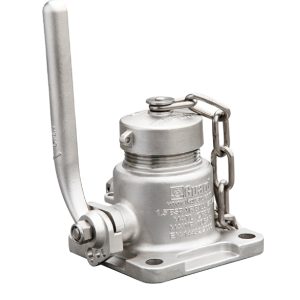
Air Inlet Ball Valve
1.5″ BSP, flanged, or double-connection ball valve designs deliver tighter shutoff and better tolerance of vapor crystallization — a real issue with certain chemicals whose vapors deposit solids on sealing surfaces. New-generation designs extend maintenance intervals substantially.
Remote Operation Devices
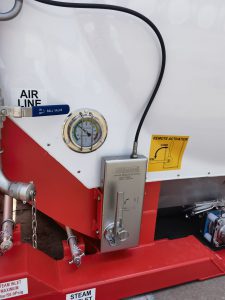
The most important safety upgrade available: a remote operation device lets the operator open the air inlet valve from ground level, or simultaneously with the bottom valve. This removes the “forgot to vent” failure mode entirely and is increasingly specified by safety-conscious fleets and required in modern terminal designs.
Spec Checklist
When specifying air inlet valves, verify:
- Flow capacity — sized to your maximum discharge rate; undersized valves still allow vacuum to develop
- Seat compatibility — EPDM / FKM / PTFE matched to cargo vapors, not just the liquid
- Body material — CF3M (316L) casting for standard chemical service
- End connections — BSP threaded, flanged, or clamped to match your manifold
- Certification — included in the tank’s ADR / TPED scope
- Operability — glove-friendly handles for winter operations
Maintenance Notes
Air inlet valves fail quietly: a slow seat leak or a sticking ball may go unnoticed for months. Include actuation checks in every pre-trip inspection, and replace seats on a time-based schedule — they are cheap insurance compared to a collapsed barrel.
Guard manufactures air inlet butterfly valves, air inlet ball valves, and remote operation devices as an integrated system. See the range.