


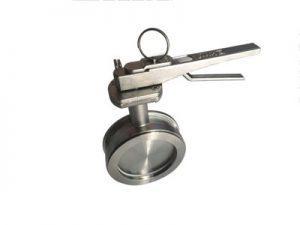
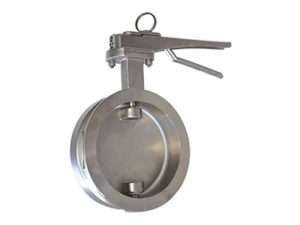
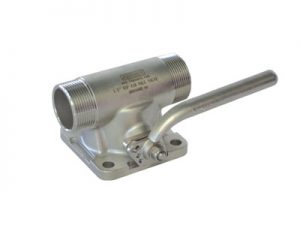
Valves on a portable tank are not plumbing components — they are pressure equipment under international law. If you build tank containers or road tankers for the European market, your valve set sits inside a specific regulatory framework. Here is the map.
ADR: The Rulebook for Road Transport
The ADR (European Agreement concerning the International Carriage of Dangerous Goods by Road) governs dangerous goods transport by road in Europe and much of Asia. Chapter 6.7 defines requirements for portable tanks, including:
- Design pressure and test pressure per tank instruction (T1–T22, T50, T75)
- Bottom discharge requirements — some cargoes require bottom-closing devices to be removed or the tank built without bottom outlets
- Relief device sizing and set pressure
- Periodic inspection obligations
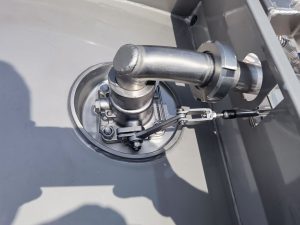
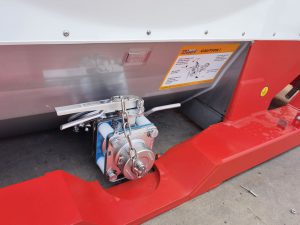
For valves, the practical consequence is simple: the valve must be certified as part of the tank’s pressure envelope, not bought as an anonymous commodity part.
TPED: The Certification Regime
The TPED (Transportable Pressure Equipment Directive 2010/35/EU) is the EU’s certification framework for transportable pressure equipment — including tank containers. A tank placed on the EU market carries the π (pi) mark, and its valves and fittings fall under the module design type examination and conformity assessment. When you source valves, you need:
- Design type examination covering the valve family
- Notified body involvement for category-appropriate modules
- Material certificates (EN 10204 3.1) for pressure parts
- Fully traceable batch test records
EN Standards: The Technical Detail
The EN series translates the directives into hardware requirements:
- EN 14432 — bottom loading and unloading valves for tanks (the 3-way discharge valve standard)
- EN 14433 – shut-off valves for bottom loading/unloading
- EN 13082 / EN 13094 family — tank design and service equipment interfaces
- EN 12266 — valve testing (pressure tests, leak rates)
When a valve carries EN 14432 or EN 14433 conformity, its shutoff classification, endurance cycling, and fire-safety provisions have been type-tested — critical claims that commodity valves cannot make.
What Tank Builders Should Verify from Suppliers
- Certificate scope — does the type examination actually cover the size and pressure class you’re buying?
- Material traceability — 3.1 certificates per heat, not mill-wide letters
- 100% testing policy — every valve pressure-tested and body-stamped, not sampled
- Batch marking — cast-in traceability that survives 10 years of service
- Change control — are you notified when the supplier changes seals or materials?

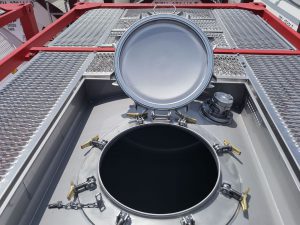
The Cost of Getting It Wrong
An uncertified valve discovered at a periodic inspection fails the tank. A valve whose certificate scope doesn’t match its application fails the audit. Both cost more than the price difference between a certified and commodity valve — often by two orders of magnitude.
Guard supplies ADR/PED-compliant valve sets with full documentation packages. Contact our technical team.