

A tank container may carry 26,000 liters of hazardous chemical at 4 bar pressure — and it relies on a small family of valves to do it safely. If you design tanks or specify components, here is the complete map of the valve system.
1. Air Inlet Valve
Mounted on the top of the tank, the air inlet valve (also called the air vent or top valve) lets controlled air into the vessel during unloading. Without it, discharging liquid creates a vacuum that can implode the tank. Depending on the design, it may be:
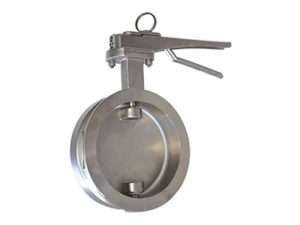
- Air inlet butterfly valves (e.g., 2″ flanged or clamped types) for general chemical service
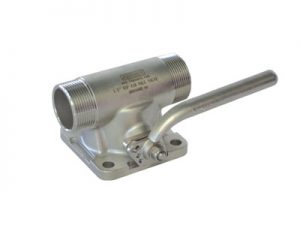
- Air inlet ball valves (1.5″ BSP or flanged) where tight shutoff and fast operation matter
- Remote operation devices that let the operator open the valve from ground level — a major safety upgrade
2. Safety Relief Valve
The tank’s last line of defense. If internal pressure exceeds the set limit — from heat, overfilling, or chemical reaction — the safety relief valve opens and vents to protect the vessel. Common configurations include 1/2″, 1″, 1.5″ BSP, and 2.5″ flanged models, sized to the tank’s test pressure and the cargo’s thermal expansion characteristics.
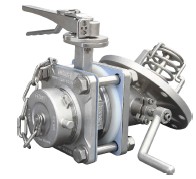
3. Bottom Discharge Valve
At the bottom of the tank, the discharge valve controls product release. On many modern tanks this is a 3-way valve, which can route flow to discharge, recirculate, or fully close — and its shear-seal design tolerates particles and crystallizing cargoes far better than a simple ball valve.
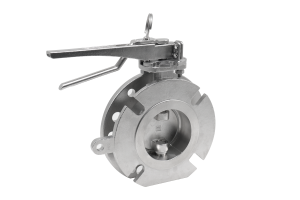
4. Butterfly Valves
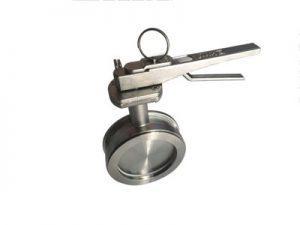
Butterfly valves (3″, 4″, 5″ clamped or unify types) are the workhorses of tank container piping. They are compact, lightweight, quick to operate, and well suited to isolating sections of the pipework. Seat material selection — EPDM, FKM, or PTFE — must match the cargo compatibility chart.
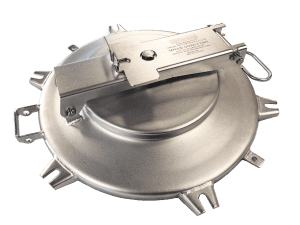
5. Manlid Assembly and Associated Fittings
While not valves in the strict sense, the manlid assembly (e.g., 500mm low-profile or domed manlids with inspection ports) works with the valve set to seal the tank, provide access for cleaning and inspection, and carry secondary relief devices.
How the System Works Together
During loading: the manlid is sealed, the bottom valve closed. During transport: safety valves guard pressure. During unloading: the operator opens the air inlet valve, then the bottom valve — liquid flows out under gravity or pressure. Every valve must be leak-tight at every stage.
Specifying Tip
Never mix valve standards casually. The complete valve set should share compatible certifications (ADR / TPED / EN), consistent material grades (CF3M for 316L), and one accountable supplier — mixed-source valve sets are a classic root cause of failed periodic inspections.
Need a single-source valve set for your next tank build? See GRAND TEK’s full valve portfolio.