


If you manufacture tank trucks, build tank containers, or are simply entering the bulk liquid logistics industry, the ISO tank container is the backbone product you need to understand inside out.
What Exactly Is a Tank Container?
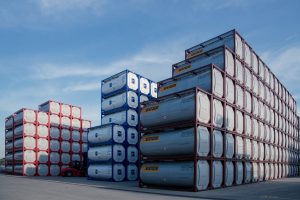
An ISO tank container (also called a tank container, ISO tank, or intermodal tank) is a stainless steel pressure vessel fixed inside a standard 20-foot ISO frame. Because it follows the same dimensional standard as a standard shipping container, it can travel by sea, rail, and road without ever transferring the cargo itself. The product stays sealed from the filling point to the final discharge point.
A typical tank container consists of:
- The barrel – a cylindrical vessel, most commonly made of 316L stainless steel, often insulated with polyurethane and clad in an aluminium jacket
- The frame – a 20-foot (or 23.5 ft / 24 ft) ISO frame with corner castings for lifting and stacking
- The manlid assembly – the access hatch on top, sealed with gaskets and clamps
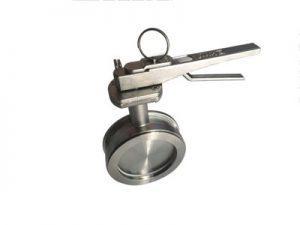
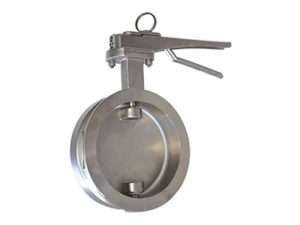
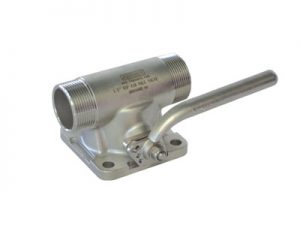
- The valve set – air inlet valves, safety relief valves, bottom discharge valves, and butterfly valves
- Fittings – flanges, spigots, clamps, and hoses
Why the World Ships Liquids This Way
Tank containers dominate global chemical, food-grade, and gas logistics for four reasons:
- Safety. The vessel is pressure-tested, certified, and inspected on a fixed cycle — far more controlled than drums or flexitanks.
- Cost efficiency. One tank container replaces roughly 80–100 drums of cargo, with no drum disposal or cleaning costs.
- Intermodal flexibility. No transloading means less product loss, less contamination risk, and less handling labor.
- Product integrity. Sealed systems keep food-grade and high-purity chemicals uncontaminated.
The Valves Are Where Reliability Lives
From a manufacturer’s point of view, the barrel rarely fails — the valves and fittings are the components that determine day-to-day reliability. Every loading cycle, every discharge, and every periodic test depends on:
- Air inlet valves maintaining correct tank pressure during unloading
- Safety relief valves protecting against overpressure
- Bottom valves and butterfly valves delivering leak-tight shutoff after thousands of cycles
That is why tank builders and fleet operators scrutinize valve suppliers as carefully as they scrutinize steel. A valve failure in service does not just cost a repair — it can mean a spilled cargo, a failed inspection, or a lost customer.
Key Takeaways
- A tank container is a certified pressure vessel in an ISO frame, enabling sealed, intermodal bulk liquid transport.
- The main parts are the barrel, frame, manlid, and valve set.
- Valve quality is the single biggest driver of in-service reliability.
Want to see valve configurations trusted by tank container manufacturers worldwide? Explore GRAND TEK’s tank container valve range.